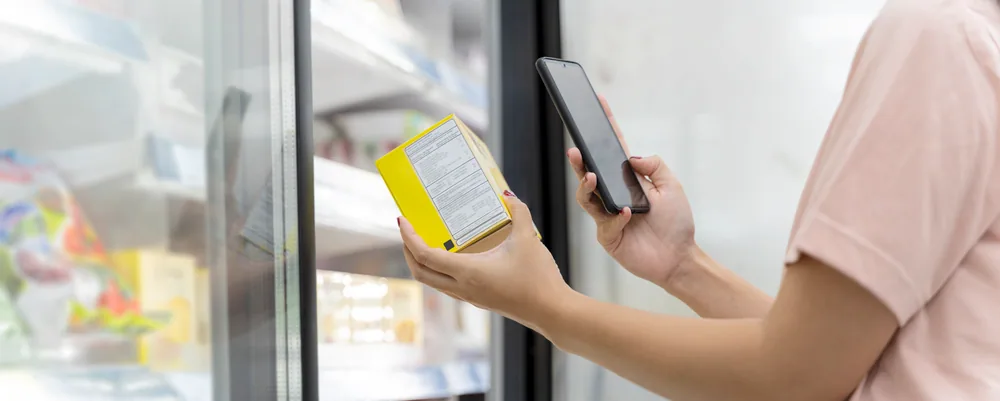
Get your products ready for the new generation of QR codes
A single QR code powered by GS1 for information, services and compliance.
Over 50 companies in Romania are working on the transition to GS1 QR codes
As the need for product information grows, GS1 QR codes connect the physical product with digital information relevant to consumers and the entire supply chain.
Since summer 2026, over 50 companies in Romania, manufacturers, retailers, technology providers and organisations from diverse industries, are jointly preparing the transition, from prioritising the information relevant to each industry and preparing the data, through to applying and scanning the QR codes.
At European level, the transition is already under way, with GS1 Digital Link implementations at companies such as Carrefour, Tesco, Albert Heijn and Unilever. In Romania, the pilot experience will help develop a model and a best-practice guide for national implementation and preparation for GS1 Sunrise 2027.
Participating companies









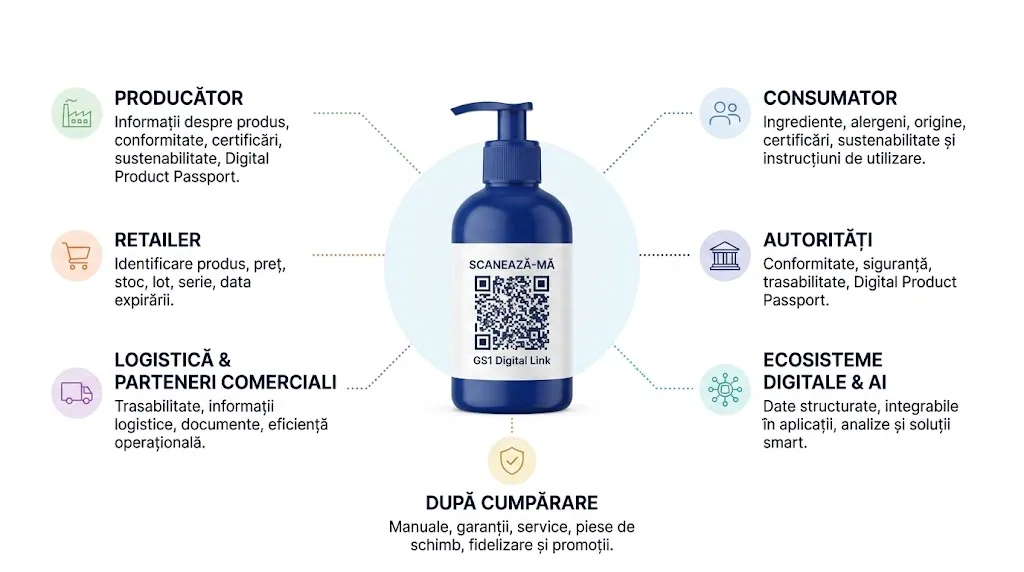
A single QR code connects the entire supply chain
GS1 Digital Link connects the physical product with the digital information and services relevant to each stakeholder: manufacturers, retailers, consumers, trading partners and authorities.
From information for consumers and trading partners to traceability, the Digital Product Passport (DPP) and other compliance requirements.
Benefits for every participant in the ecosystem
For manufacturers
Turn every product into a gateway to information, services and digital experiences.
GS1 Digital Link enables manufacturers to connect products to up-to-date information without changing the packaging or relying on proprietary solutions. The same code can simultaneously serve commercial, logistics, compliance and consumer-communication needs.
Benefits
Want to see what Digital Link could mean for your products?
Talk to our team about the scenarios relevant to your company.
How does it work?
Not just a QR code. A connected product.
A regular QR code usually takes you to a fixed destination. With GS1 Digital Link, the QR code powered by GS1 identifies the product and connects it to different information and services that can evolve over time, without changing the code printed on the product. What's more, the same scan can lead to different information and services depending on the user and the context.
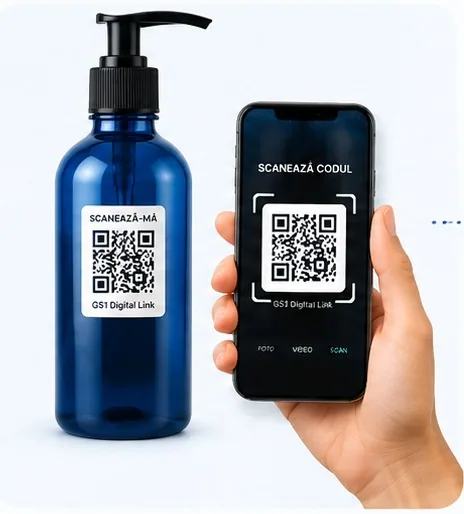 1
1It all starts with a scan
The consumer, retailer or a supply-chain partner scans the same GS1 QR code on the product.
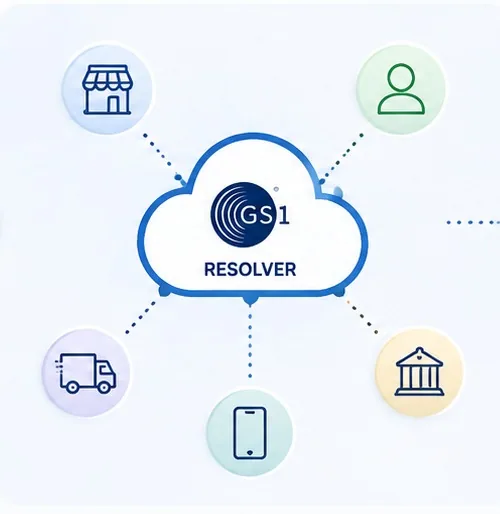 2
2Digital Link makes the connection
The code identifies the product, and GS1 Digital Link connects the scan with the relevant information or service.
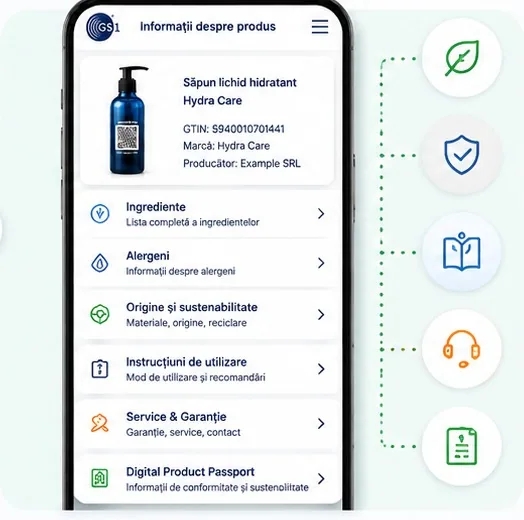 3
3Access the right information
Consumer information, traceability, documentation, compliance, after-sales services – it can all start from the same code.

See how much a single GS1 QR Code can do.
Explore how the same code connects a product to information and services from different sources.
Explore the demoThe standard that connects products to digital information
GS1 Digital Link extends the GS1 system of standards into the digital world, connecting identifiers such as GTIN with online information, services and experiences.
It is a global, open and interoperable standard that allows the same product to be connected to information relevant to consumers, trading partners, authorities and digital systems.
It's not just a QR code. It's the link between the product's identity and the digital world.
The global transition to 2D codes
The industry is moving from traditional barcodes to 2D codes, such as the QR code, which can identify the product and connect it to digital information.
Through the global GS1 Sunrise 2027initiative, the retail industry is preparing to use GS1 2D codes, including at the point of sale.
In Europe, this evolution also responds to the growing need for traceability, circularity and compliance, including the Digital Product Passport (DPP).

Frequently asked questions about GS1 Digital Link
Answers to the most common questions about GS1 QR codes, Sunrise 2027 and the transition to 2D codes.
Let's talk about your products.
The GS1 team can help you identify the relevant scenarios and next steps for implementing GS1 Digital Link.